Traboule transforms any ebook into an intelligent learning experience with Bionic Reading, SQ3R method, concept mapping, and spaced repetition.
You finish a book and within weeks, you've forgotten the key ideas, the connections between concepts, and the arguments that convinced you. That's because traditional reading is a passive experience — your eyes move across pages, but your brain isn't actively engaged in processing, questioning, and connecting ideas.
Traboule applies proven learning science — the SQ3R method, spaced repetition, active recall, and bionic reading — to turn every reading session into deep, lasting comprehension.
Open any ePub directly in the app. AI analyzes your ebook, extracts knowledge structures, and enriches it — all on your device.
Import any standard ePub ebook directly into Traboule. The app parses the full text while preserving its structure, ready for analysis.
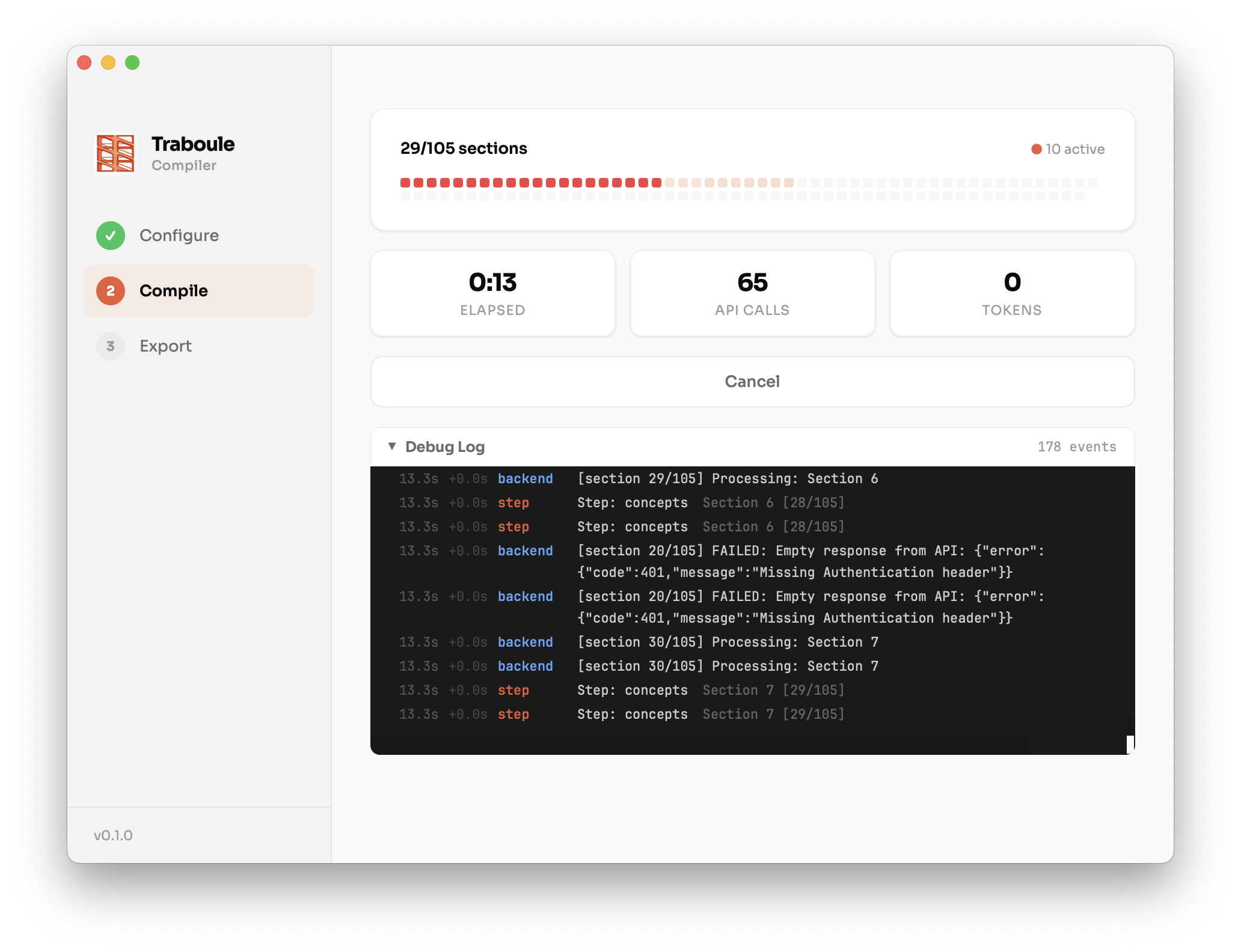
→The in-app pipeline extracts concepts, generates SQ3R questions, creates flashcards, maps cross-section links, and identifies 6 structural patterns in every section.
→All the intelligence is embedded — concepts, questions, flashcards, structures — ready for active reading. Export as .traboule to share or archive.
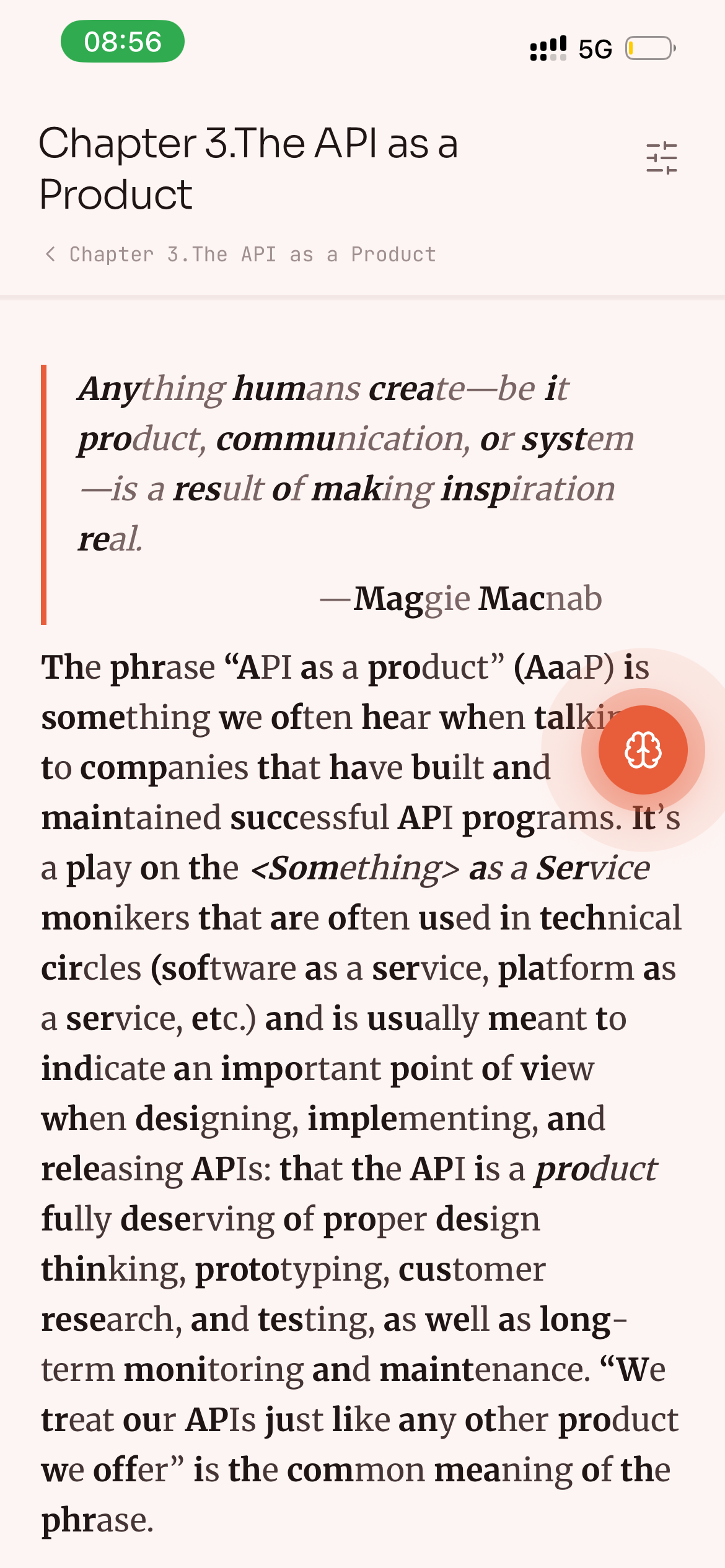
Artificial fixation points guide your eyes through text by bolding the initial letters of each word. Your brain completes the rest, creating a faster and more focused reading flow.
Adjust intensity from 1 to 5 to match your comfort level and reading speed.
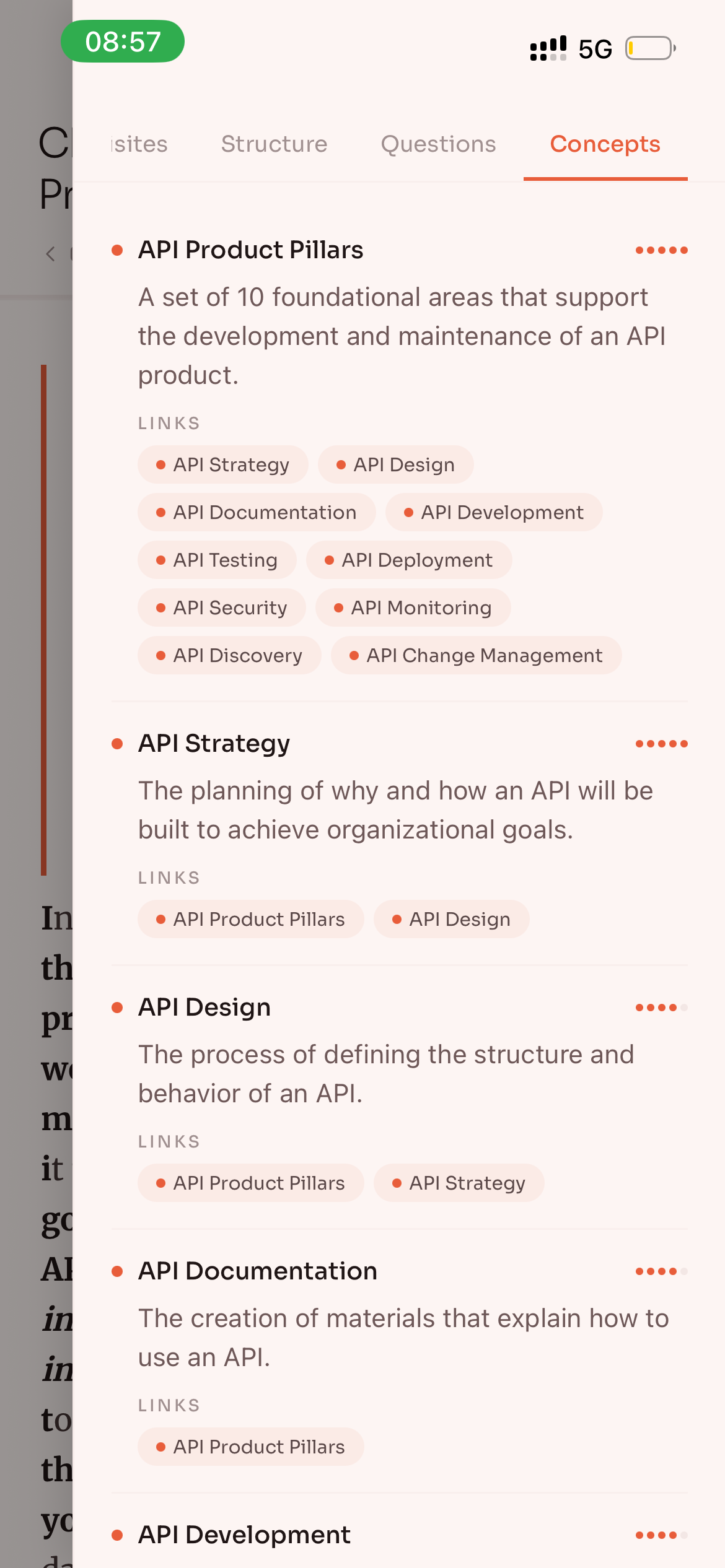
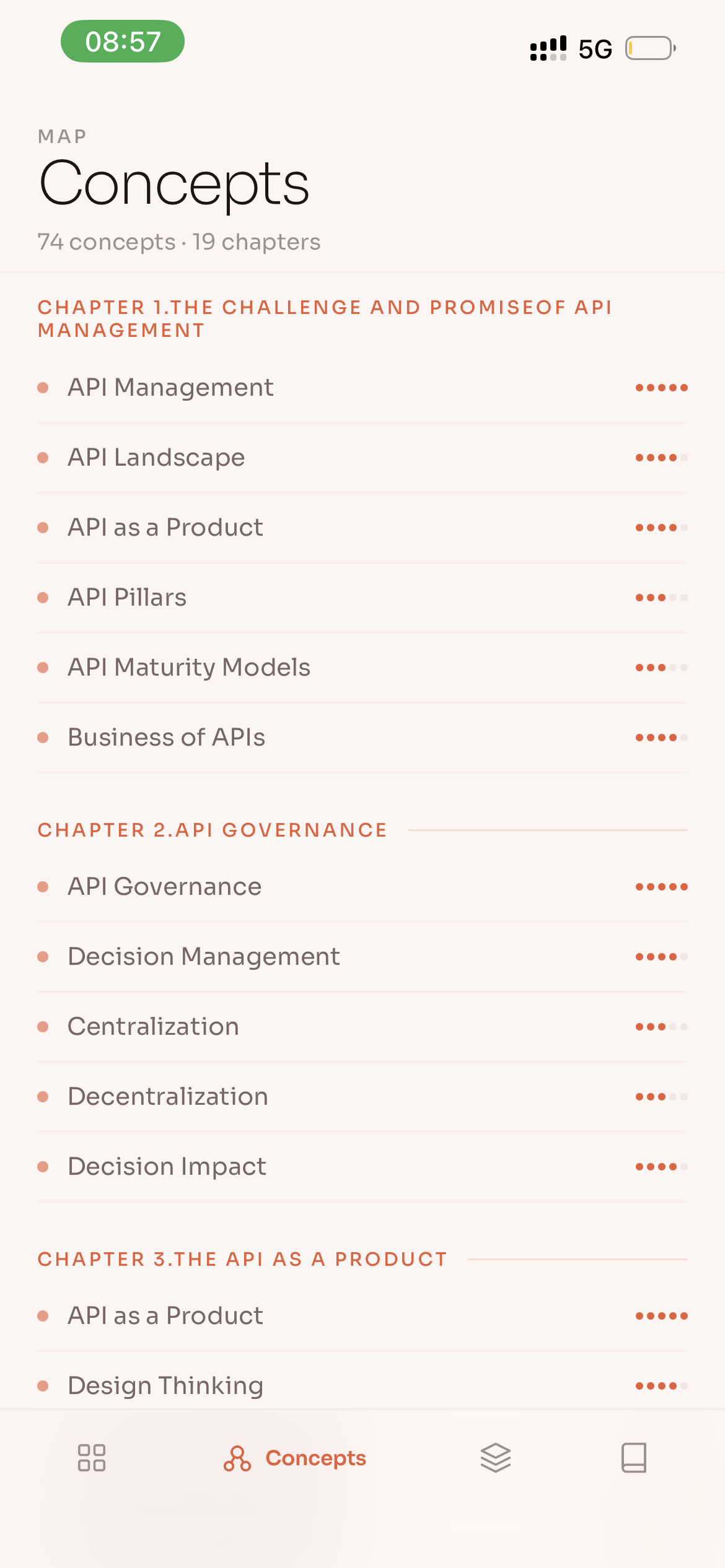
Every concept in the book is extracted, defined, and linked. See which ideas are connected across chapters, what builds on what, and which concepts are prerequisites for others.
Swipe left while reading to reveal concepts in the current section. Tap any concept to see its full definition, importance rating, and cross-section links.
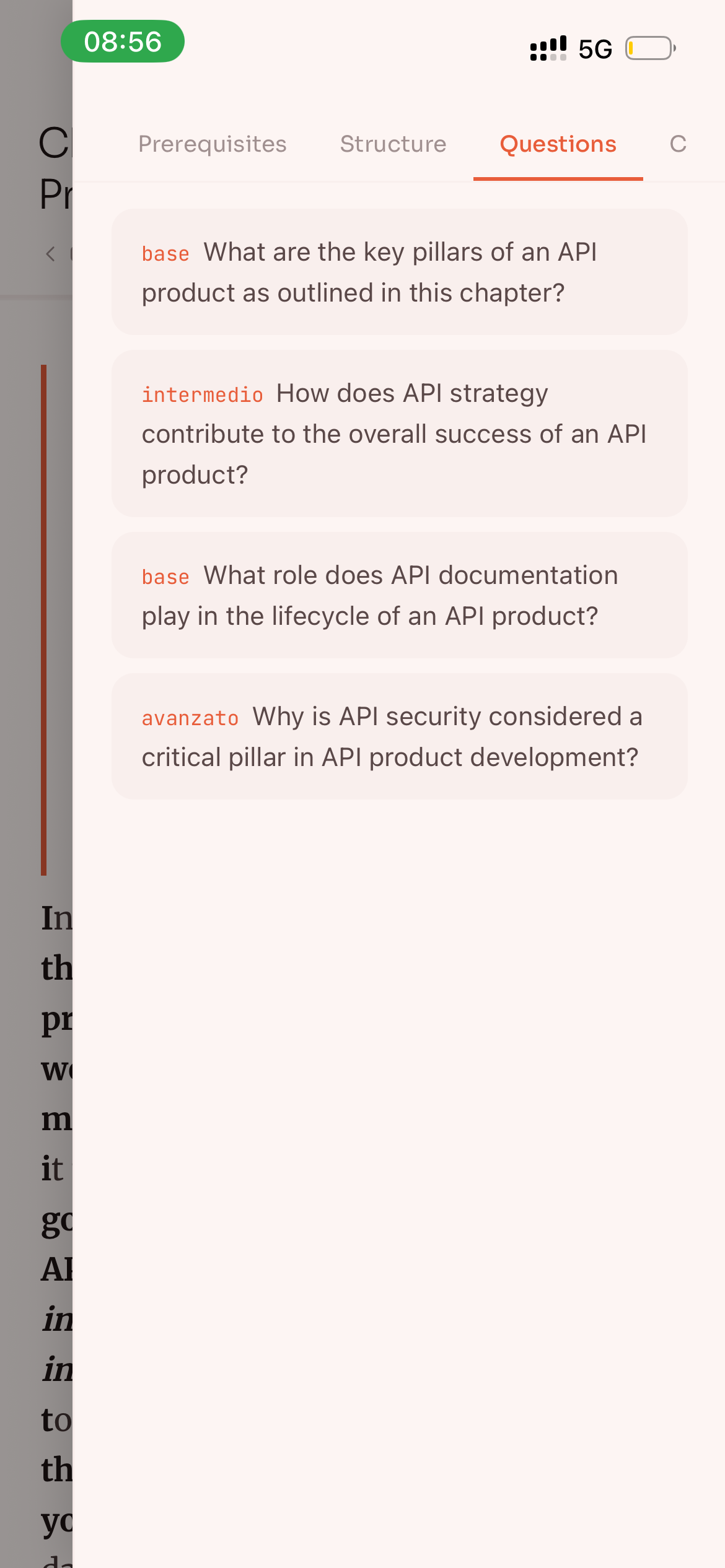
For every section, AI generates targeted comprehension questions at three difficulty levels: base, intermediate, and advanced. Questions are linked to specific paragraphs so you can verify your answers.
The SQ3R cycle — Survey, Question, Read, Recite, Review — guides you through a structured reading process proven to dramatically improve retention.
AI-generated flashcards cover definitions, relationships between concepts, and practical applications. Rate your confidence and the system schedules reviews at optimal intervals.
Three card types ensure comprehensive coverage: definition cards test recall of key terms, relationship cards test how concepts connect, and application cards test real-world understanding.
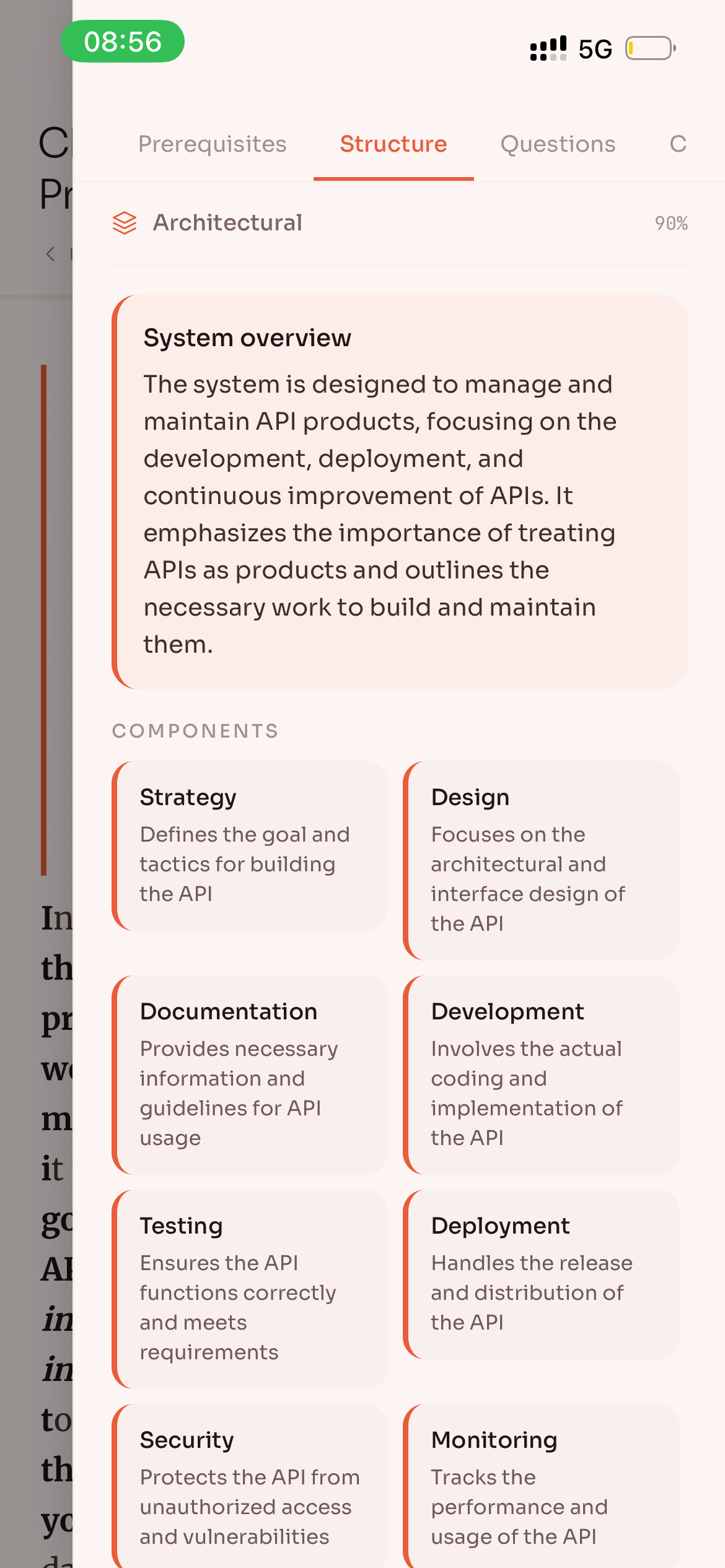
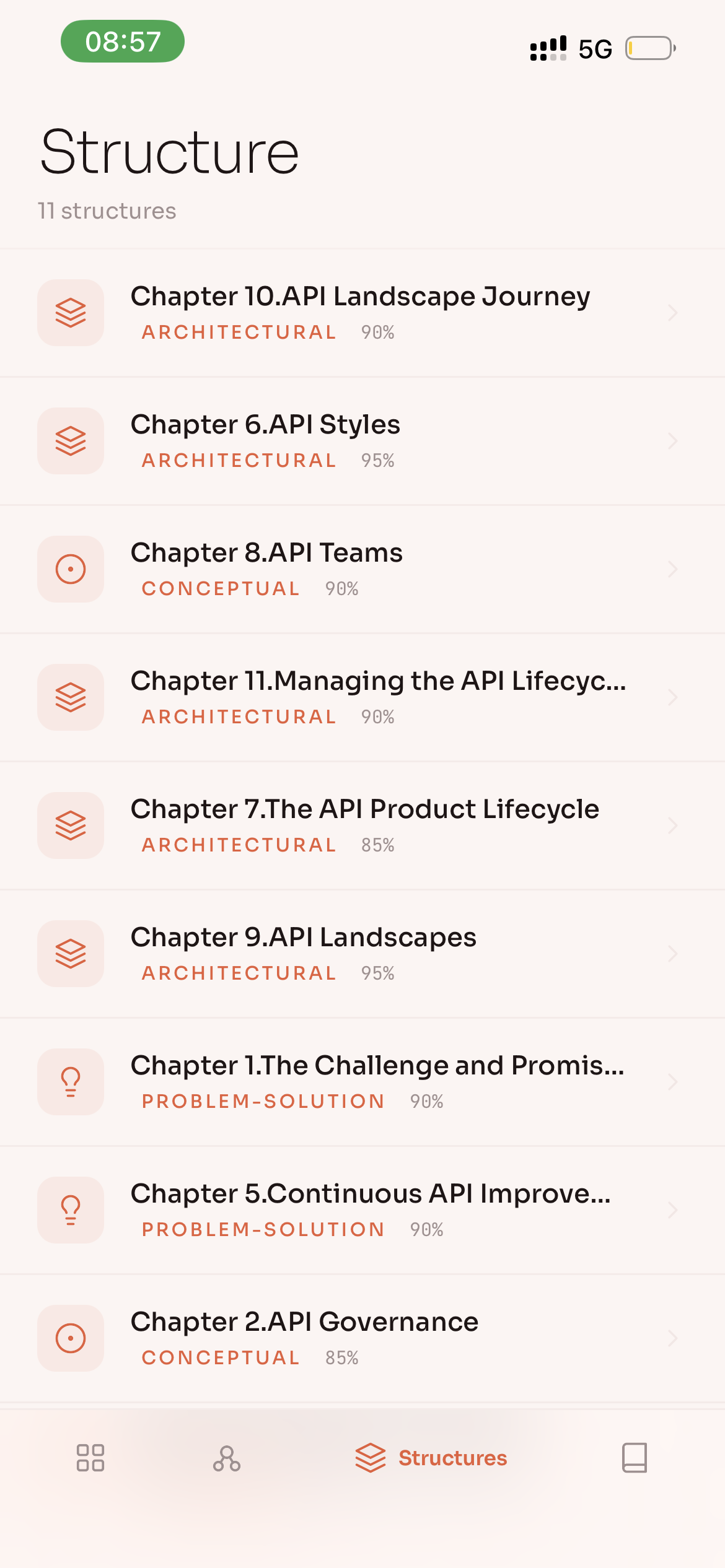
Every section is analyzed through six different structural lenses: pyramidal, procedural, conceptual, architectural, comparative, and problem-solution. Each method reveals a different dimension of the text.
Confidence scores tell you which structure best fits each section, and paragraph references link every structural element back to the source text.
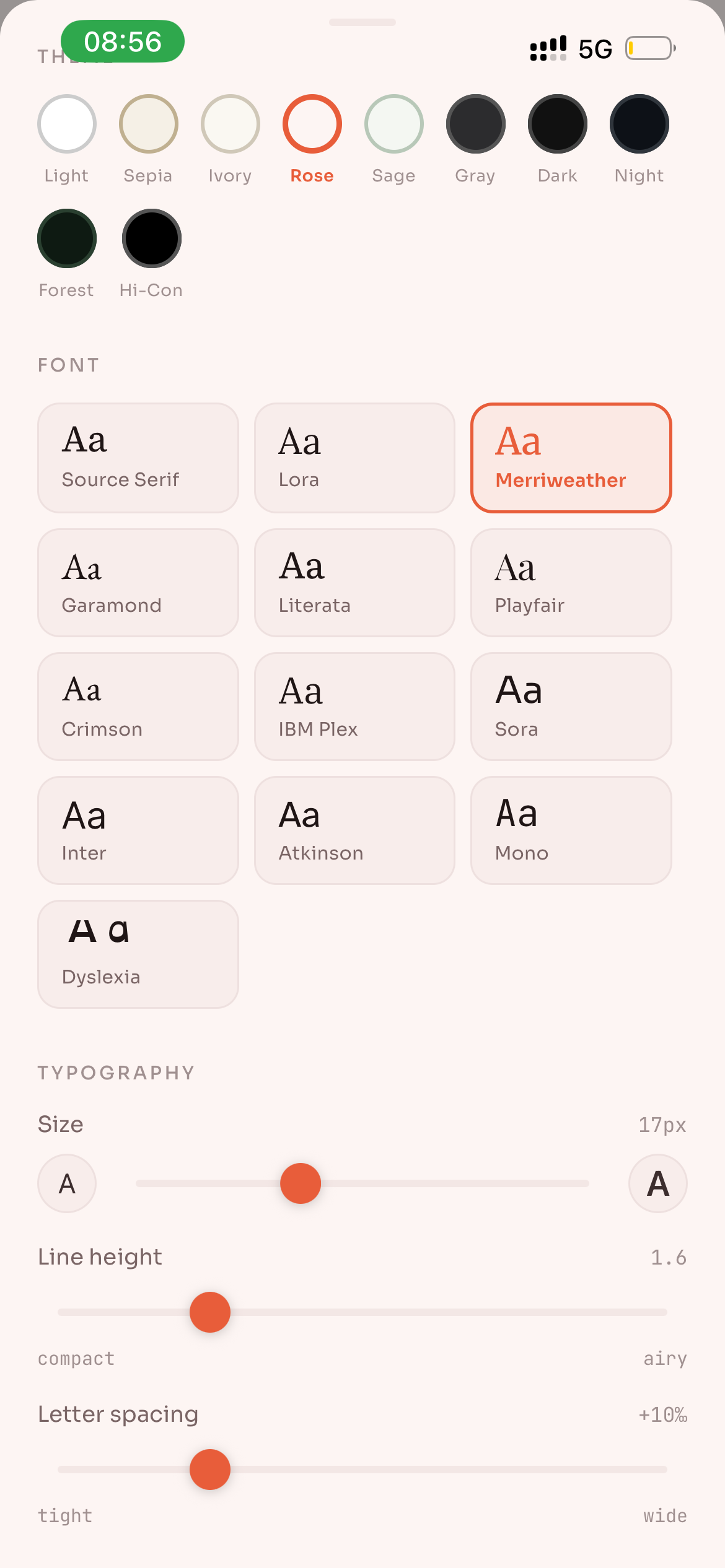
From bright White to deep Night, from warm Sepia to high-contrast Hi-Con — find the perfect visual environment for your reading session. Every theme is carefully calibrated for extended reading comfort.
Choose from 13 typefaces including serif classics (Source Serif 4, Garamond), modern sans (Sora, Inter), monospace (JetBrains Mono), and the accessibility-focused OpenDyslexic. Fine-tune font size, line height, and letter spacing.
Each section of your book is analyzed through six structural methods. The AI assigns confidence scores so you know which lens fits best.
Central thesis at the top, supported by sub-theses, each resting on specific evidence. Every level answers the "why?" of the level above.
Step-by-step processes with clear objectives, prerequisites, validation criteria, and troubleshooting. For how-to and methodology texts.
Core concept with its properties, relationships, applications, limitations, and examples. For texts centered around a key idea or definition.
System overview, components, interactions, data flows, design patterns, and trade-offs. For texts describing complex systems or organizations.
Side-by-side analysis of two or more items across evaluation criteria, with point-by-point comparisons and author recommendations.
From problem through root causes and context to proposed solutions, implementation details, and results. For case studies and research texts.
Switch between reading modes depending on your goal: speed, comprehension, retention, or accessibility.
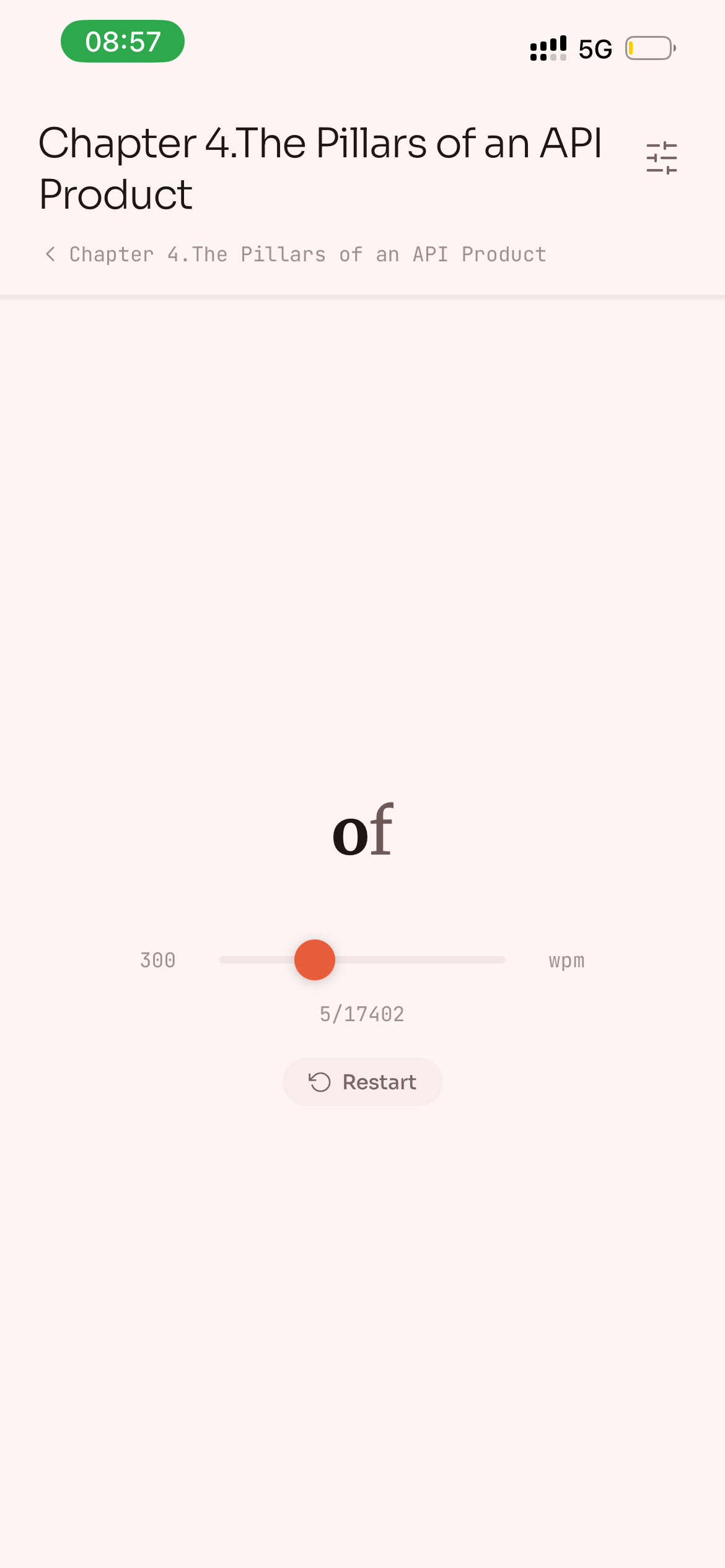
Rapid Serial Visual Presentation. Words appear one at a time at adjustable speed (150–600 wpm). Eliminates regression and builds reading speed.
Artificial fixation points on initial letters. Adjustable intensity (1–5). Guides your eyes through text for faster, more focused reading.
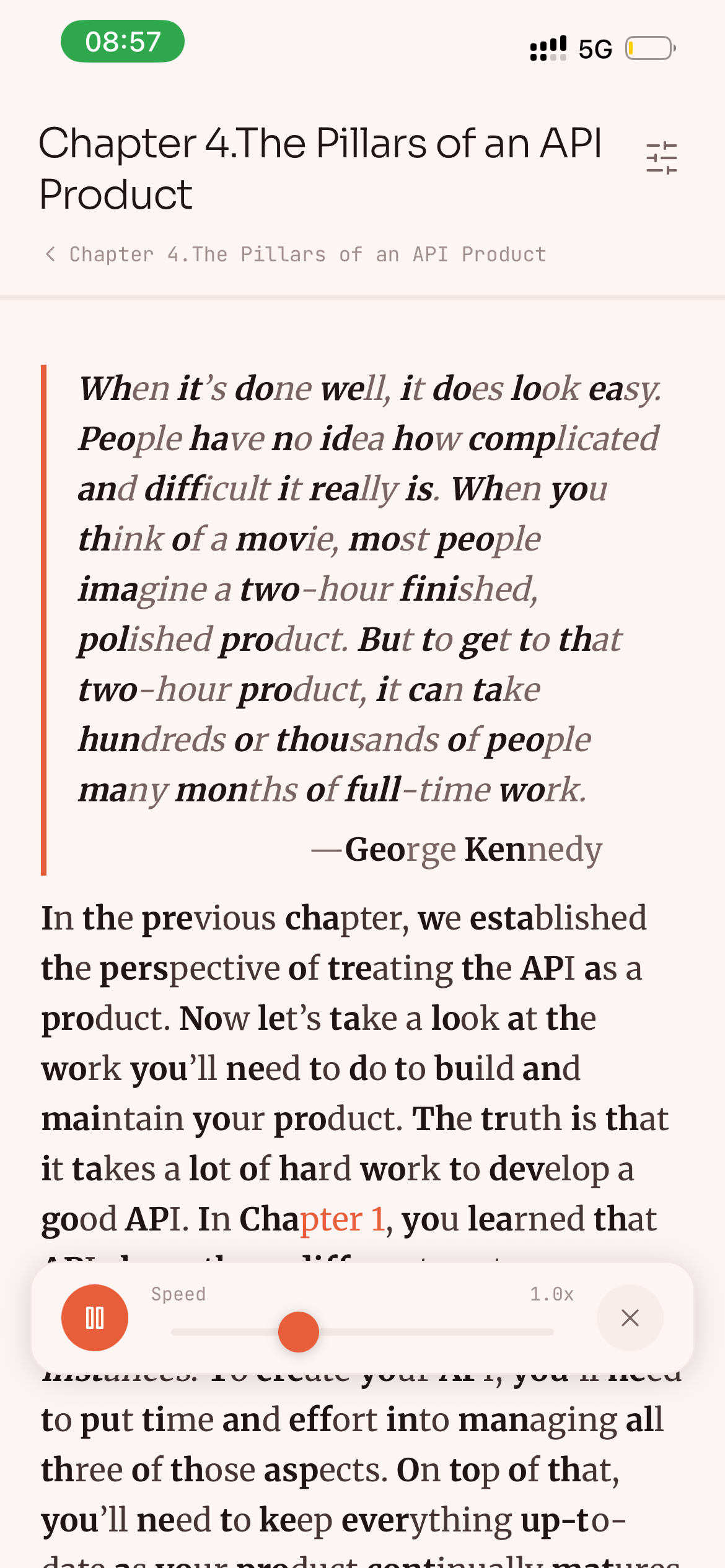
Listen to sections read aloud with adjustable speed. Perfect for commutes or when you want to give your eyes a break.
Clean, distraction-free reading with progress tracking, section navigation, and gesture controls. Swipe left for concepts.
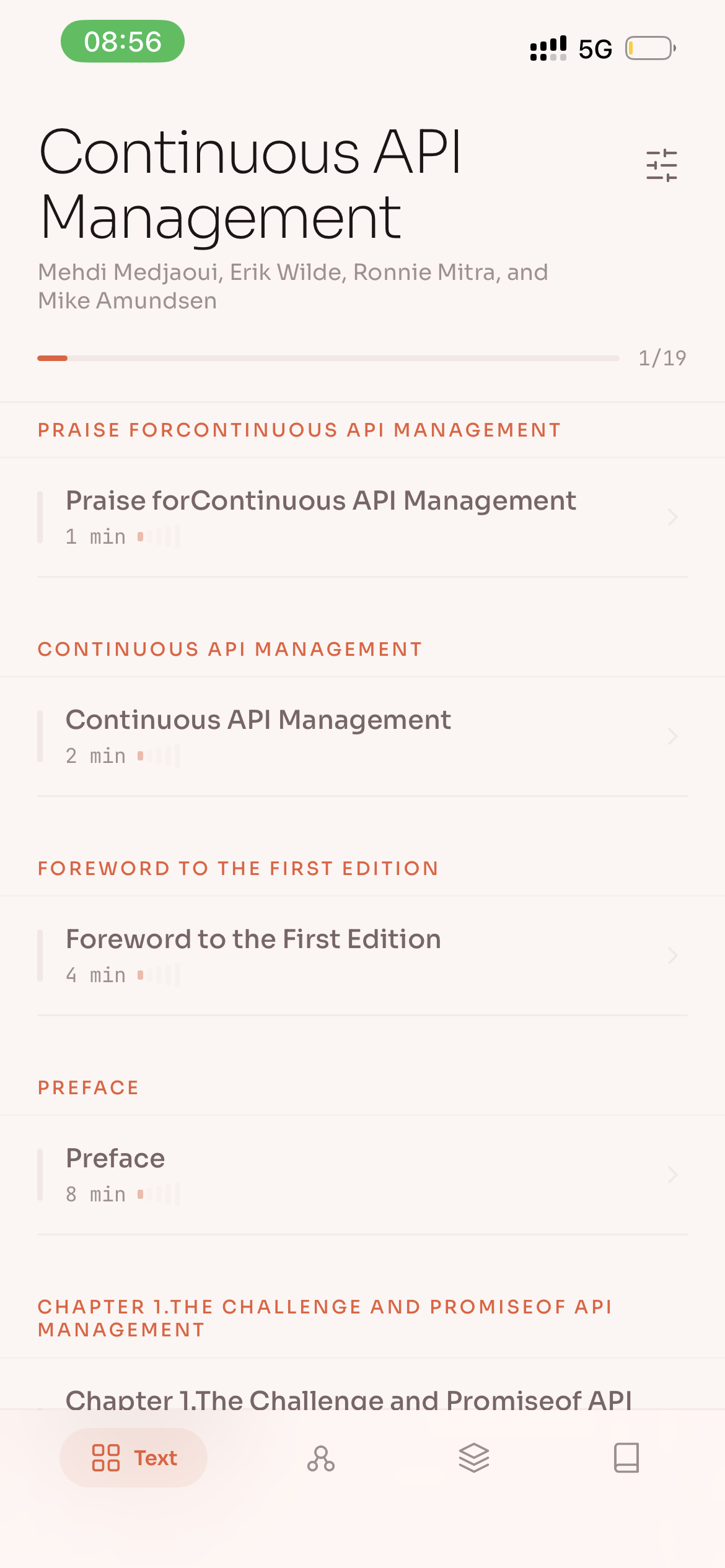
No separate tools needed. Import any ePub and the app's AI pipeline transforms it into an enriched .traboule file with concepts, questions, flashcards, and structural analysis.
Open any standard ePub file from your device. The parser preserves the original text and structure.
→The in-app pipeline extracts concepts, generates questions, creates flashcards, and analyzes structures — automatically.
→Everything is ready. Read with bionic mode, explore concepts, review flashcards — all from a single enriched file.
Traboule is coming soon to iOS and Android. Join the waitlist to get early access and be notified at launch.